Many small businesses hear "AI for government contracting" and assume the tool is supposed to find a winner, write a proposal, and reveal a shortcut. That framing is wrong. The practical use case is narrower and more useful: AI helps you read faster, summarize the right parts, flag missing proof, and turn a pile of notice text into a disciplined decision.
That distinction matters because federal opportunities are not ordinary sales leads. A notice can be market research under FAR Part 10, a pre-solicitation notice on SAM.gov Contract Opportunities, or a solicitation structured under the uniform contract format in FAR 15.204-1. If your team asks AI the wrong question on the wrong notice type, it can produce polished nonsense.
What AI can safely review
AI is most useful when the source package is already in front of you. That package usually includes the SAM.gov notice, attached files, agency instructions, and any internal facts your team already knows about its own capabilities. From there, AI can help with tasks that are analytical rather than determinative.
- Requirement extraction: pull out the statement of work, contract type, place of performance, response date, submission instructions, and attachment list.
- Notice classification: separate a Sources Sought notice, pre-solicitation notice, solicitation, or amendment so your team responds with the right posture.
- Gap identification: flag where the opportunity appears to require clearances, facilities, staffing depth, certifications, or relevant past performance you do not yet have.
- Comparison across notices: summarize how two opportunities differ on scope, evaluation burden, and urgency.
- First-pass questions list: draft the operational questions a human reviewer should answer before the team spends another day on the file.
That is why the strongest nearby workflow is still the search-to-decision chain: use the SAM.gov Search Plan Builder to narrow the lane, use the federal contract opportunity search workflow to collect the right notice package, review the matching RFP analysis guide when the file is already solicitation-grade, and only then use AI to speed up the reading.
What AI cannot safely decide for you
Government buyers do not award based on how clean your summary sounds. They award based on fit, proof, responsiveness, pricing, risk, and compliance. AI can discuss those areas, but it cannot make them true.
- Eligibility: AI cannot decide whether your business truly qualifies for a set-aside, socioeconomic program, or teaming structure.
- Past performance: AI cannot create credible relevant experience where the company does not have it.
- Customer access: AI cannot replace real buyer knowledge, incumbent awareness, or relationship context.
- Pricing judgment: AI can organize pricing factors, but it cannot guarantee that your price is compliant, competitive, or profitable.
- Bid commitment: AI cannot absorb the delivery risk if your team wins work it cannot actually execute.
Start with the right source package
If the source package is weak, the analysis will be weak. Before using AI, make sure you have the live notice, not a screenshot or a sales summary. On SAM.gov, the official contract-opportunity system states that opportunities include pre-solicitation notices, solicitation notices, award notices, and sole source notices. SAM.gov Help also maintains a notice-type reference so users do not confuse early market research with a full procurement path.
For negotiated procurements, FAR 15.204-1 lays out the uniform contract format. In practice, that means your human reviewer should know where to look for sections such as scope, deliveries, clauses, and proposal instructions before asking AI to summarize the file. A model can help interpret those sections, but it should not be your first reader.
That is also why Sources Sought notices deserve a separate workflow. Under FAR 10.002, acquisitions begin with a description of the government's need and market research then determines whether commercial or nondevelopmental solutions can meet it. A Sources Sought notice is often part of that market-research process. If your team treats it like a final RFP, AI may confidently optimize the wrong response.
Use AI for first-pass extraction, not fake confidence
Once you have the source package, AI can be very good at producing a first-pass case file. Ask for extraction, not for guarantees. Good prompts are operational.
- Summarize the requirement in plain English and list every deliverable that appears mandatory.
- Identify whether the notice looks like market research, pre-solicitation, or a final solicitation and explain why from the source text.
- List the pieces of proof the agency appears to want from an offeror or responder.
- Flag where the notice suggests the work is better suited to a prime, subcontractor, or team arrangement.
- Draft a 72-hour action list for a human reviewer.
Bad prompts are vague and outcome-hungry. "Can we win this?" is weak because it invites performance theater. "What evidence gaps would keep a credible small business from submitting a strong response?" is better because it anchors the output to proof and constraints.
Where AI fits in the GovScout workflow
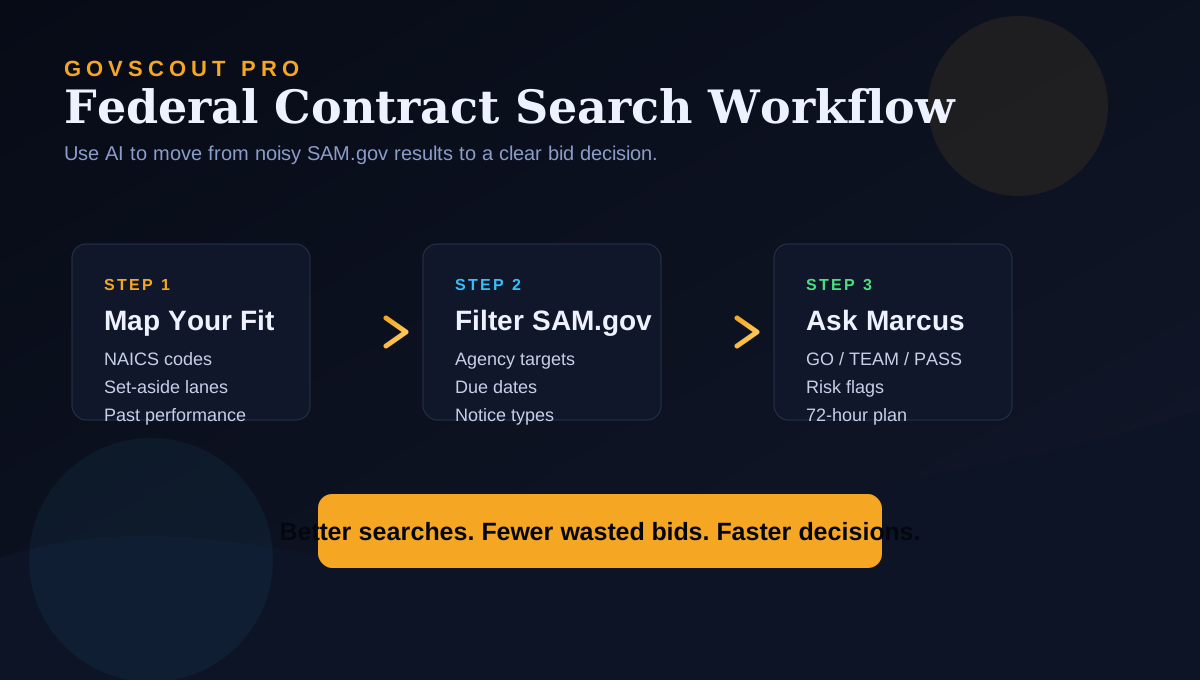
GovScout should remain a decision-support workflow, not a magic-answer workflow. The better sequence is:
- Use the search workflow to narrow the notice set.
- Use the Sources Sought workflow if the notice is still in market-research mode.
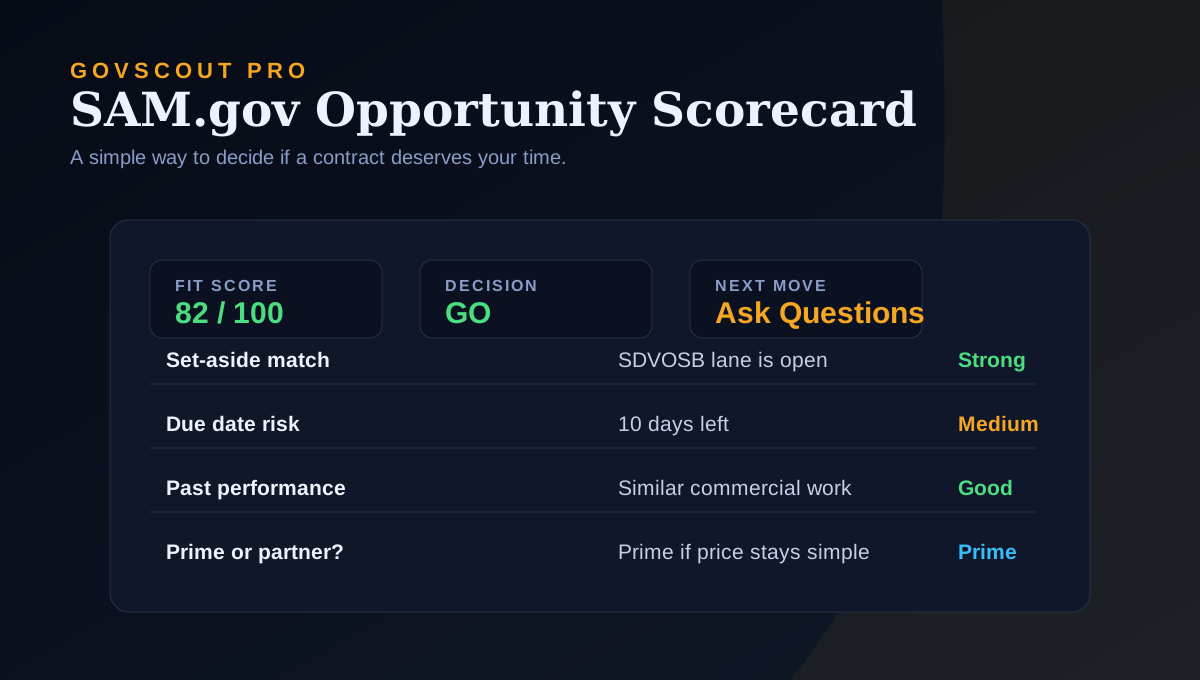
- Use the Bid / No-Bid Scorecard to force an explicit fit discussion.
- Use Marcus to summarize the file, flag gaps, and organize the next 72 hours.
- Use human judgment to decide bid, team, watch, or pass.
That is materially different from saying AI writes proposals or predicts awards. It is a workflow claim, not an outcome claim.
How small businesses should separate AI-helpful questions from human-only questions
Questions AI can help structure
- What is the buyer asking for?
- What documents or sections matter most first?
- What missing proof would make this response weak?
- Which clauses, timelines, or performance conditions look operationally risky?
- Which internal stakeholders need to review the file in the next two days?
Questions humans still have to own
- Can we deliver this work with our current team, partners, and cash posture?
- Do we have the customer credibility to prime this, or should we team?
- Is the likely price environment acceptable for us?
- Does this pursuit help or distract from our target market?
- Are we willing to absorb the proposal and execution burden if we win?
Those human-only questions are why a clean small-business contracting foundation matters more than prompt cleverness.
Common AI failure modes in federal contracting
The most common failure mode is not hallucination in the abstract. It is false certainty around a thin evidence packet.
- Wrong notice type: the team uploads a Sources Sought notice and asks for proposal strategy.
- Missing attachments: the model summarizes the synopsis but never sees the core statement of work or amendment.
- Invented fit: the output assumes the company has the right clearances, facilities, or relevant experience.
- Overbroad set-aside assumptions: the model speaks as if eligibility is obvious when the company still needs a human review of status and program rules.
- Workflow confusion: the team treats a good summary as a go-decision instead of as review support.
If your team wants a safer default, require every AI review to end with three labeled sections: facts from the notice, assumptions that still need verification, and decisions reserved for a human owner.
A practical 72-hour review pattern
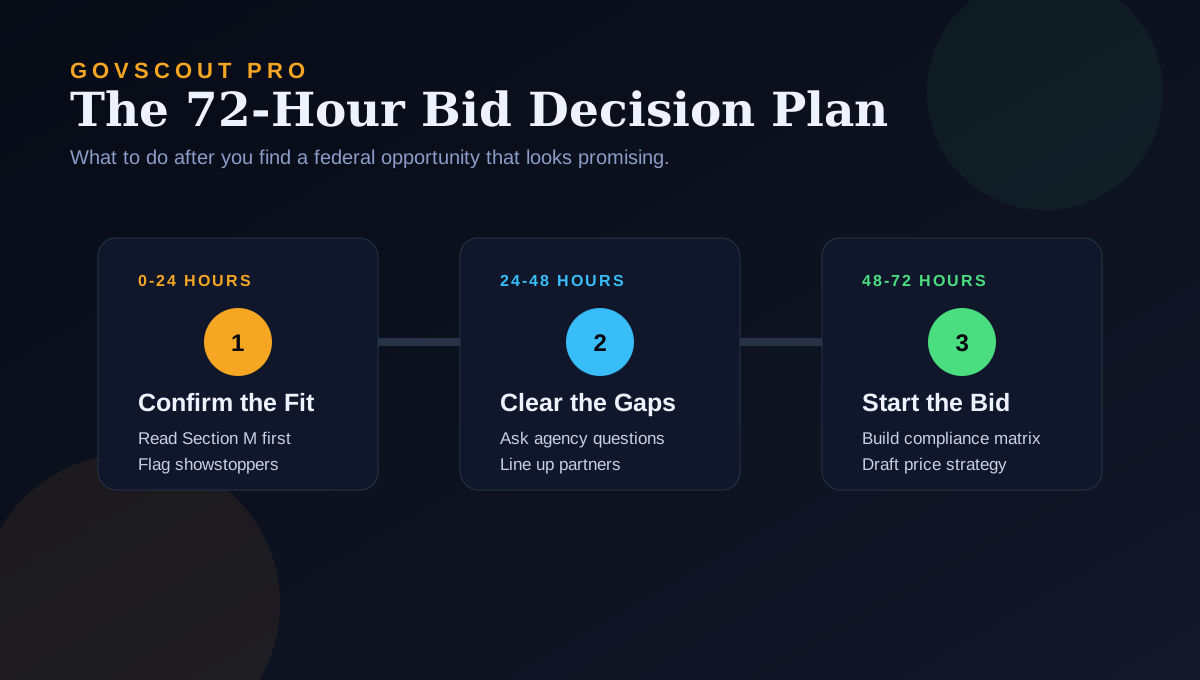
Day 1: classify the notice, pull out deadlines, identify missing attachments, and compare the requirement against your actual lane.
Day 2: use AI to draft a gap list and a questions list for the human reviewer, then decide whether the file belongs in a bid, team, watch, or pass lane.
Day 3: if the file survives, turn the analysis into next-step work: partner outreach, clarification questions, compliance mapping, pricing inputs, and leadership review.
That pattern works better than asking AI for a binary answer on day one because it forces the team to separate extraction from commitment.
How GovScout should describe this honestly
Safe language is straightforward: GovScout helps small businesses review opportunity packages, organize evidence, spot likely gaps, and turn contract research into a clearer next action. That is a real, supportable claim. It matches the surrounding site direction around decision support, search workflow, and bid/no-bid discipline.
Unsafe language is also straightforward: claims that AI can secure awards on its own, guarantee better decisions, or remove the need for accountable human procurement judgment. Those are not supportable claims and should stay out of the page.