Military and veteran experience can make a business more credible in government contracting, but it does not remove the hard parts. It does not make a company automatically certified. It does not fix a weak NAICS profile. It does not create past performance. And it does not turn a bad-fit solicitation into a bid you should chase.
That is the honest frame for veteran-owned government contracting in 2026. The advantage is real. The shortcut story is not.
SBA now runs the Veteran Small Business Certification program, commonly called VetCert. According to SBA, certification with SBA is what allows certified service-disabled veteran-owned small businesses to compete for federal sole-source and set-aside contracts across the federal government, while certified veteran-owned small businesses get additional opportunities at the Department of Veterans Affairs under VA's Vets First program. That matters. But certification only creates eligibility. It does not create strategy.
Start with the current rules, not the old veteran-contracting lore
If you still hear people say "the VA handles the certification" or "you can just self-certify and go after veteran set-asides," stop there and re-check the source. SBA's veterans page states that the certification function transferred from VA to SBA as of January 1, 2023. In practice, that means veteran-owned firms need to treat VetCert as a current operating requirement, not an optional admin task you can defer until later.
SBA's public veteran certification guidance is also clearer than a lot of recycled consultant content. A firm must be small under the size standard for a NAICS code in its SAM profile, at least 51% owned and controlled by one or more veterans, and for SDVOSB status the qualifying veterans must be service-disabled as recognized by VA. That sounds basic, but it is exactly where many businesses lose months. They treat veteran ownership as the whole test and forget the size-standard, control, and documentation side.
This is the first place where experience does not help enough on its own. Being a veteran may help you understand the mission. It does not substitute for the operating records and certification evidence SBA reviews.
Where veteran experience actually helps
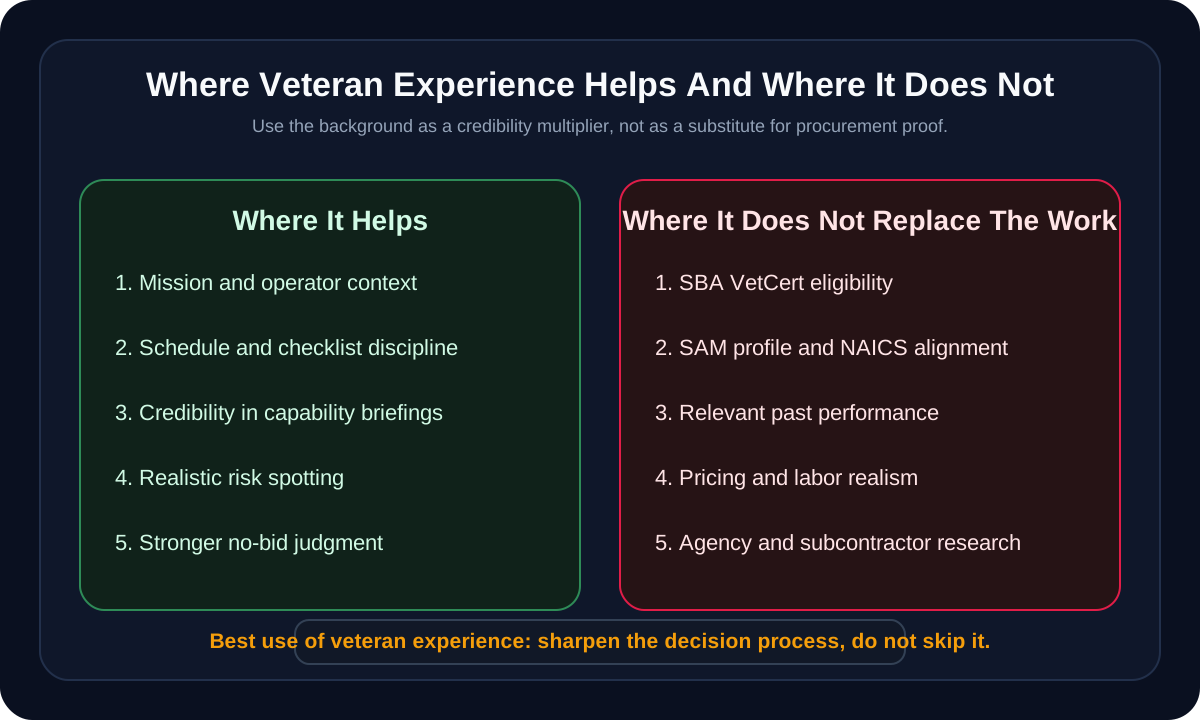
The strongest veteran advantage is not a slogan. It is pattern recognition. Many veteran founders understand chain of command, documentation discipline, schedule pressure, maintenance realities, logistics friction, field execution, and the difference between what a requirement says on paper and what the buyer is trying to avoid in real life. Those are useful instincts when you read federal work.
That experience tends to help in five concrete ways.
- Mission understanding. Veteran founders often read operational language faster because they recognize how agencies describe urgency, continuity, support, readiness, or failure risk.
- Documentation habits. Companies that already run checklists, after-action reviews, controlled records, and equipment or staffing logs usually adapt faster to federal compliance work.
- Execution credibility. When your background matches the environment buying the work, your capability briefing can sound more grounded and less generic.
- Team discipline. Small federal bids fall apart on deadlines, attachment management, role clarity, and follow-through. Veteran-led teams often have an advantage there if they keep the process tight.
- Better no-bid judgment. Operators who have seen hard jobs up close are often better at spotting scope drift, underpriced staffing, and unrealistic mobilization expectations.
Those are real strengths. They become visible only when you translate them into the language buyers can score: relevant scope, specific references, staffing logic, facility or clearance reality, pricing discipline, and a clean delivery plan.
Where veteran experience does not help enough by itself
This is where a lot of veteran-owned firms get stuck. They know they can do difficult work. They assume the market will recognize that automatically. It will not.
A veteran background does not automatically solve:
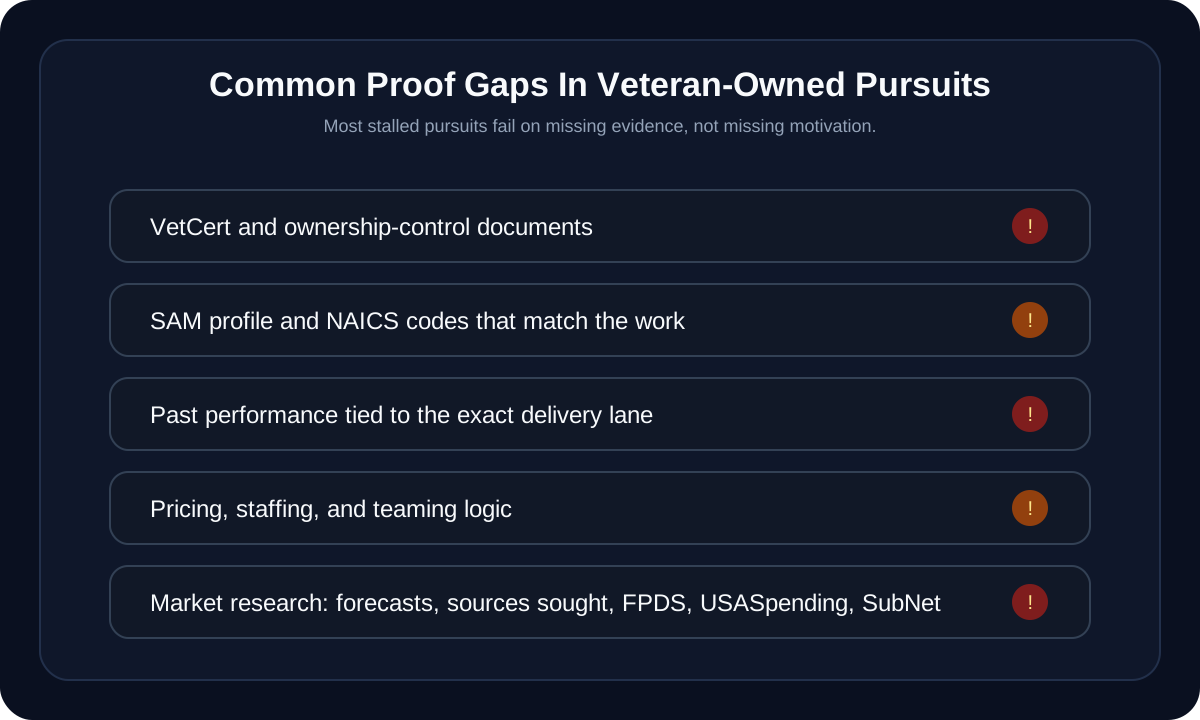
- Certification status. If your VetCert record is incomplete or your SAM profile is weak, the buyer does not owe you a pass.
- NAICS fit. Agencies buy against codes, scopes, and set-aside structures. Good experience in one environment does not mean every adjacent code is a fit.
- Past performance relevance. Buyers still want proof that your business, or your delivery team, has done similar work at a similar level of complexity.
- Pricing realism. Pride in the mission does not fix a labor mix that cannot support delivery.
- Procurement timing. If you first hear about the opportunity when the solicitation closes in ten days, your veteran status is not enough to recover the lost positioning time.
- Relationship gaps. Agencies and primes still respond to consistent presence, useful capability conversations, and early market-research participation.
That is why the useful mindset is not "I served, therefore I should win." It is "my experience may improve how I qualify, explain, and execute the work, but I still need a real pursuit system."
What the first practical workflow should look like
The clean first workflow is more boring than the internet wants it to be, but it works.
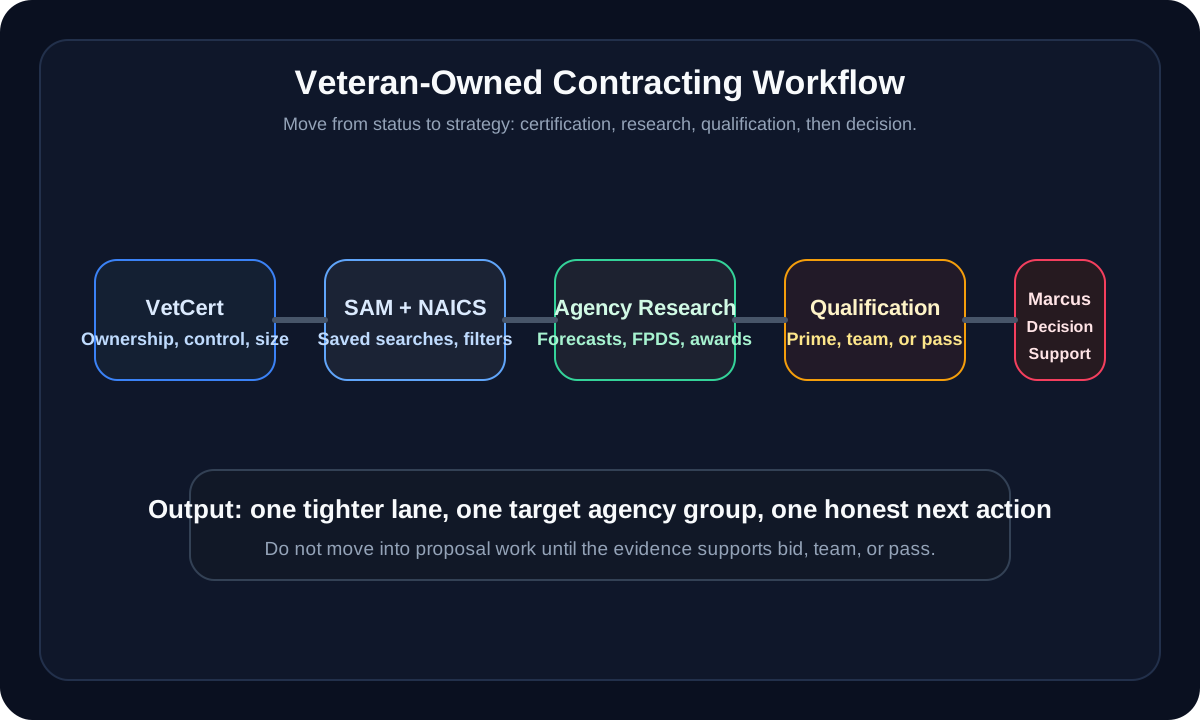
1. Confirm the certification path
Use SBA's VetCert guidance and portal, not rumor. Make sure your firm's ownership, control, and NAICS-linked small-business status are documented correctly. If you want VA-specific veteran opportunities, treat that certification status as a hard prerequisite, not a later upgrade.
2. Clean up your SAM profile
SAM is not just registration. SAM is where your contracting identity gets used by the market. SAM.gov states that anyone may search contract opportunities without an account, but an account allows saved searches, tracking, and interested-vendor participation. In practical terms, that means your team should build repeatable searches instead of starting from scratch every week.
3. Build the search around your actual delivery lane
Start with the service lane where your business can win honestly now. Map the primary NAICS codes, adjacent codes you can support, geography, and set-aside filters. If your delivery record is stronger as a subcontractor than as a prime, say that early and build the workflow around it.
4. Read ahead of the RFP
Use sources sought notices, agency forecasts, and expiring-award data to get in front of work before the full competition starts. VA's Doing Business with VA roadmap points small businesses to the VA Forecast of Contracting Opportunities, the VA Vendor Portal, and SAM.gov. That is the right behavior pattern: watch the forecast, monitor the live notices, and show up before the closing week scramble.
5. Use award history instead of guessing
SBA's contracting guidance points firms to FPDS and USASpending.gov to understand who buys what, from whom, and in which categories. That is how a veteran-owned business stops calling the entire government a target market. Use award history to see which agencies actually buy your scope, what contract sizes are normal, who the incumbents are, and where subcontracting may be more realistic than priming.
6. Turn the research into a bid, team, or pass decision
This is where GovScout should help as decision support, not as magic. Bring the notice, the agency, your capability facts, your team constraints, and your proof gaps into a structured review. The right output is not "this looks exciting." The right output is "bid," "team," "pass," or "not yet."
VA opportunities are real, but they still need a method
Many veteran-owned firms assume VA is the obvious first buyer. Sometimes it is. Sometimes it is not.
SBA's veteran guidance says certified VOSBs get additional opportunities at VA under Vets First, and VA's own business roadmap points firms to the VA forecast and vendor tools. That makes VA an important buyer category. But important does not mean automatic. You still need to ask:
- Does VA actually buy my lane in the regions I can serve?
- Do I have the staffing, compliance, and past performance depth this requirement expects?
- Am I better positioned to subcontract into this work first?
- Is my capability statement specific enough for the program office, or is it still generic?
Veteran status helps most at VA when it is paired with a clean capability story, a realistic operating footprint, and early relationship work through the small-business liaison and market-research cycle. It helps least when a company treats the status itself as the whole strategy.
The most common veteran-owned contracting mistakes
The pattern is familiar.
- Overbroad search behavior. Searching generic keywords without NAICS, geography, or set-aside discipline.
- Treating every veteran-friendly buyer as a fit. Agency affinity is not the same thing as scope fit.
- Ignoring subcontracting. SBA's guidance still points firms to SUB-Net and prime-contractor directories for a reason. Sub work is often the fastest honest path to relevant proof.
- Confusing service background with corporate past performance. The story helps. The scored evidence still has to map to the work.
- Waiting for the RFP. The later you engage, the more you are paying proposal costs without any positioning advantage.
- Forcing a prime bid where a team bid is smarter. A veteran-owned badge does not fix missing labor categories, coverage, or delivery references.
How Marcus should be used here
Marcus should not be treated as proof that you are ready. He should be treated as a decision-support layer after you have assembled the facts. That means your VetCert status, SAM profile, NAICS lane, known past performance, target agencies, notice text, and clear questions all matter.
The useful Marcus prompts are operational:
- "Review this sources sought notice against our SDVOSB profile and tell me if we should respond."
- "Compare this agency forecast item to our current staffing and identify the gaps."
- "Turn these NAICS codes into a SAM.gov search plan for a veteran-owned HVAC contractor in Nevada."
- "Assess whether this should be a prime bid or a teaming pursuit."
The unhelpful prompt is "find me contracts I can win." A useful workflow still requires human judgment, official sources, and proof review.
Bottom line
Veteran-owned government contracting works best when you use veteran experience as a credibility multiplier, not as a substitute for procurement discipline. The experience helps you understand the work, communicate risk, and run a tighter pursuit process. It does not remove the need for VetCert, a clean SAM identity, award-history research, relationship building, and honest go or no-go decisions.
If you want the simplest next step, do not start by trying to out-search the whole federal market. Start by tightening one delivery lane, one set of NAICS codes, one agency group, and one realistic pursuit path. Then use official sources to confirm the rules, use award data to confirm the market, and use decision support to avoid the bad-fit bids that waste veteran-owned businesses the most time.