Federal Contracting Intelligence Brief: August 2026
The biggest August signal is not one single rule change. It is the shift from simple opportunity search toward proof-based pursuit decisions: certification posture, profile discoverability, threshold logic, forecast timing, teaming routes, and policy status all matter before a small business spends proposal time.
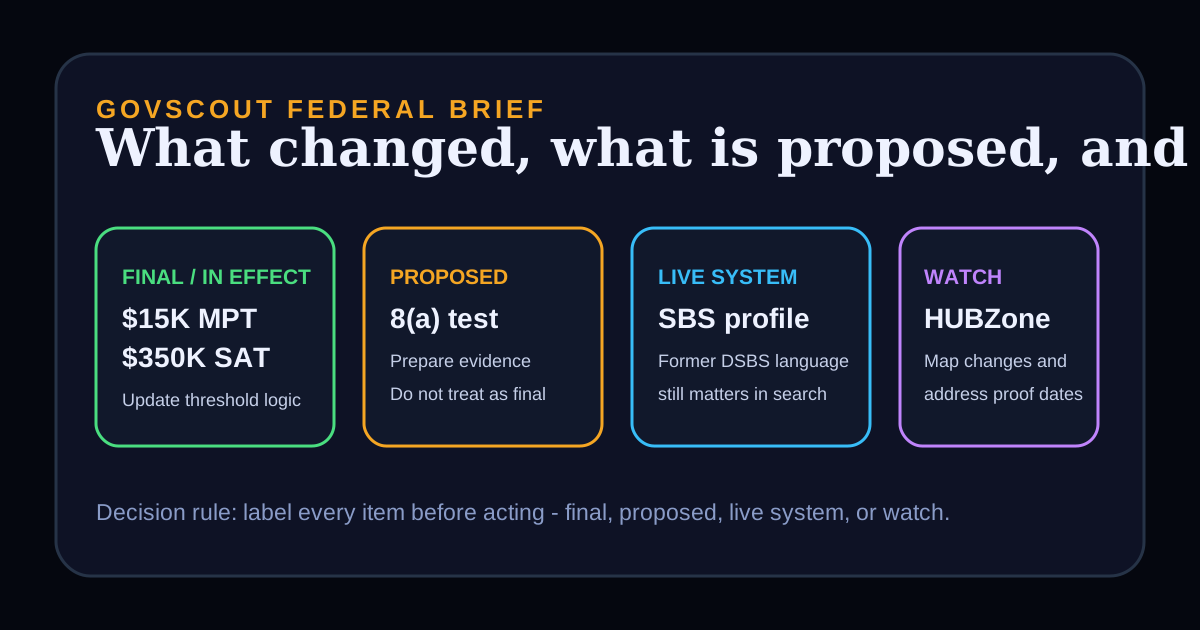
Decision Map
Threshold logic should reflect the updated micro-purchase, simplified acquisition, subcontracting-plan, and simplified-commercial boundaries.
The June 2026 SBA proposal is important, but it is not a final rule. Treat it as a preparation signal, not current law.
DSBS language still matters for search, but the live discoverability path now points to SBA's Small Business Search environment.
HUBZone eligibility should be checked by address and date because redesignated and disaster-area status can expire.
What Changed Enough To Act On
1. 8(a) eligibility is in a proposed-rule posture. SBA's June 11, 2026 Federal Register notice proposes changes to individual-owned 8(a) social-disadvantage standards and says comments were due July 13, 2026. The brief should not tell applicants that a final rule exists. It should tell them to prepare clean documentation and watch the rulemaking.
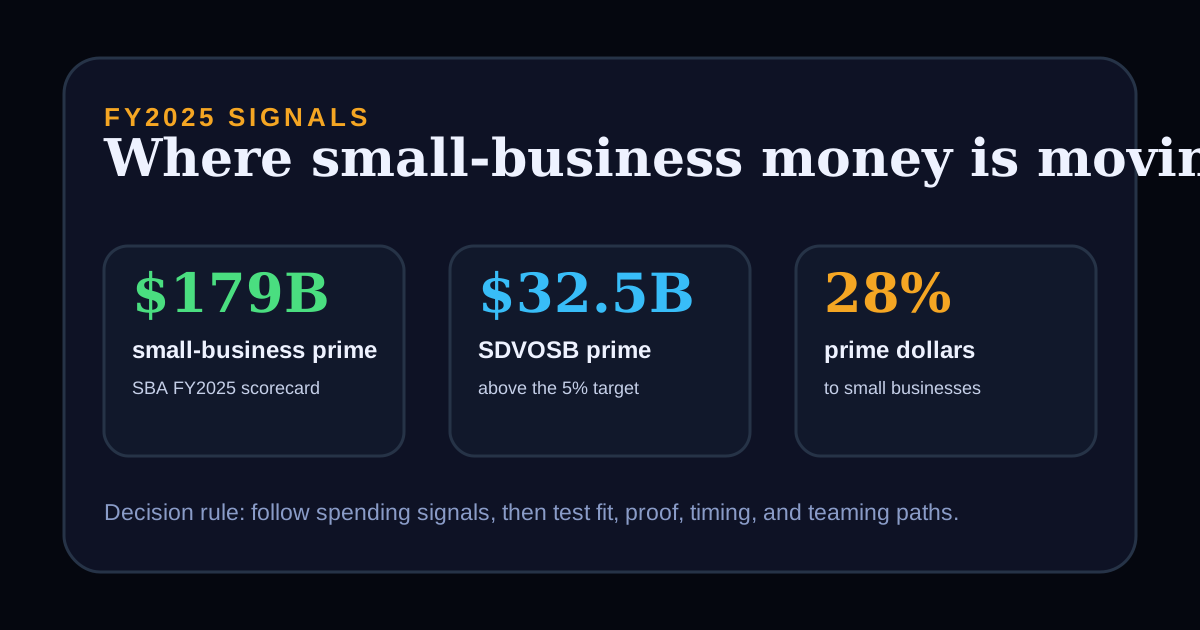
2. Small-business spending signals are strong, but uneven. SBA's FY2025 scorecard release says small businesses received nearly 28% of prime contracting dollars, with $179 billion in prime awards and $273 billion in combined prime and subcontracting dollars. It also reports SDVOSBs received $32.5 billion in prime contracts, above the 5% target. That makes SDVOSB content and tools a real authority lane, not a side topic.
3. Small Business Search is now a practical discoverability surface. SBA's live Small Business Search environment is where agencies and primes can identify small businesses. The product move is obvious: GovScout should eventually score profile completeness, keyword fit, certifications, NAICS alignment, and proof language.
4. Threshold changes affect pursuit logic. The FAR Council's inflation adjustment changed acquisition-related thresholds effective October 1, 2025. For small businesses, the most visible changes are the micro-purchase threshold moving to $15,000 and the simplified acquisition threshold moving to $350,000. GovScout content and product logic should distinguish quick-turn small purchases from bigger formal proposal work.
The Product Roadmap Hidden Inside This Brief
| Signal | What GovScout should do | Status label |
|---|---|---|
| Threshold updates | Update public education and product rules so small purchases, simplified acquisitions, subcontracting-plan thresholds, and simplified-commercial thresholds are not treated as one generic bucket. | Final / in effect |
| 8(a) rulemaking | Add an 8(a) change monitor and explain what documents participants should keep ready without claiming a new rule is final. | Proposed |
| SBS discoverability | Create an SBS profile auditor that checks keywords, NAICS, socioeconomic certifications, capability narrative, and past-performance signals. | Live system |
| HUBZone map movement | Add a timestamped address-verification workflow and remind users to save proof when eligibility matters to a pursuit. | Watch |
| Forecast and teaming routes | Move users earlier in the pipeline by connecting forecasts, sources sought, SUBNet, prime-contractor research, and SAM.gov notices. | Live resources |
Why Forecasts And Teaming Matter More Than Most Beginners Think
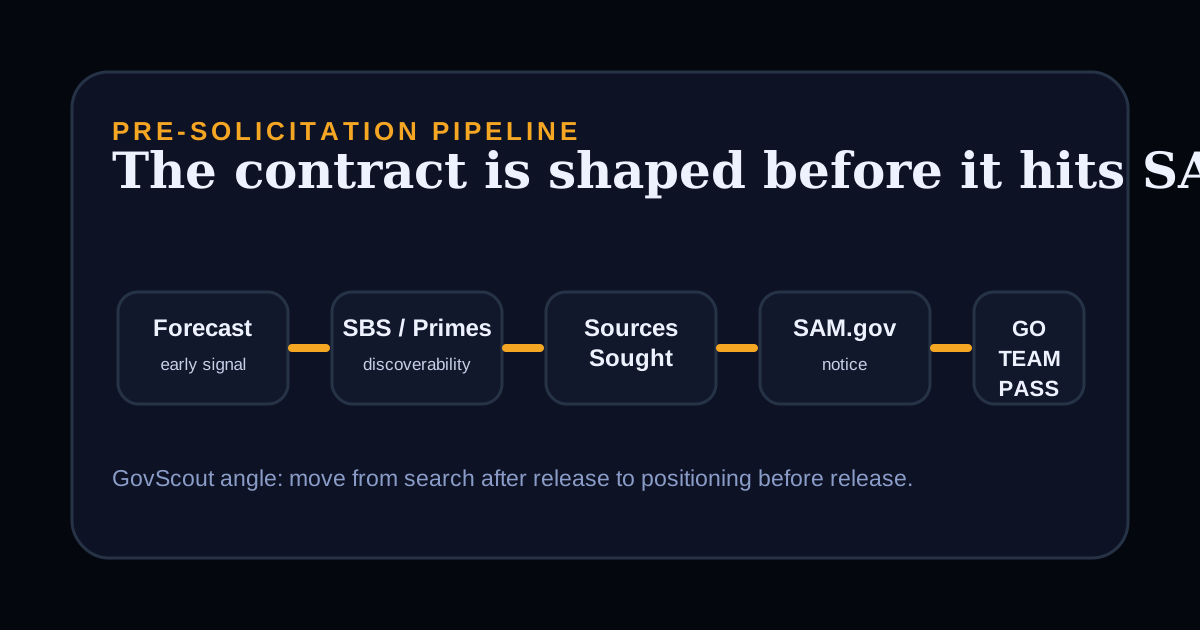
GSA describes the Forecast of Contracting Opportunities as a planning tool that can help small businesses prepare early, sometimes months before a solicitation appears on SAM.gov. SBA also describes SUBNet as a way for large federal prime contractors to find small subcontractors. Together, those two resources support the same point: the pursuit starts before the final solicitation.
If a small business waits until the RFP is posted, it may be too late to shape the buyer's thinking, find a prime, prepare a source-sought response, or build the right proof file. That is why GovScout should keep teaching users to move from "search result" to "pursuit timeline."
What This Means For A Small Contractor This Week
- Check whether your target opportunities are under simplified-acquisition thresholds before assuming a full formal proposal workflow.
- Update your SBA Small Business Search profile language so it matches what agencies and primes would actually search.
- If you are 8(a), keep your compliance and ownership/control documentation organized, but do not act like the June 2026 proposal is already a final rule.
- If you are SDVOSB, lean into the lane with better proof, not louder claims. The award signal is real, but fit still matters.
- If HUBZone matters, verify the address and save the date of the check.
- Use forecasts, sources sought notices, SUBNet, and prime directories before waiting for a finished RFP.
GovScout's Strategic Position
The strongest version of GovScout is not another contract database. It is a pre-solicitation decision system for small businesses. The platform should help users connect certification status, SBS visibility, agency demand, threshold category, incumbent clues, teaming route, document burden, and deadline pressure into one decision: GO, TEAM, PASS, or PENDING.
That is what separates search from intelligence. Search finds the notice. Intelligence changes what you do next.
Turn the brief into a pursuit decision
Use GovScout Pro to review an opportunity, check fit, organize proof, and decide whether the next move is GO, TEAM, PASS, or PENDING.
Analyze an OpportunityOfficial Sources Reviewed
- Federal Register: SBA 8(a) proposed rule, 91 FR 35433, reviewed August 10, 2026.
- Federal Register: FAR acquisition-threshold inflation adjustment, reviewed August 10, 2026.
- SBA FY2025 small-business procurement scorecard release, reviewed August 10, 2026.
- SBA Small Business Search, reviewed August 10, 2026.
- GSA Forecast of Contracting Opportunities guidance, reviewed August 10, 2026.
- SBA SUBNet subcontracting opportunities, reviewed August 10, 2026.
- SBA certifications and HUBZone update guidance, reviewed August 10, 2026.